Chemical & Heavy Industry Zones
Chemical and heavy industry zones provide specialized infrastructure for energy-intensive manufacturing. These industrial clusters support petrochemicals, steel, and materials production while ensuring safety and environmental management.
Chemical & Heavy Industry Zones
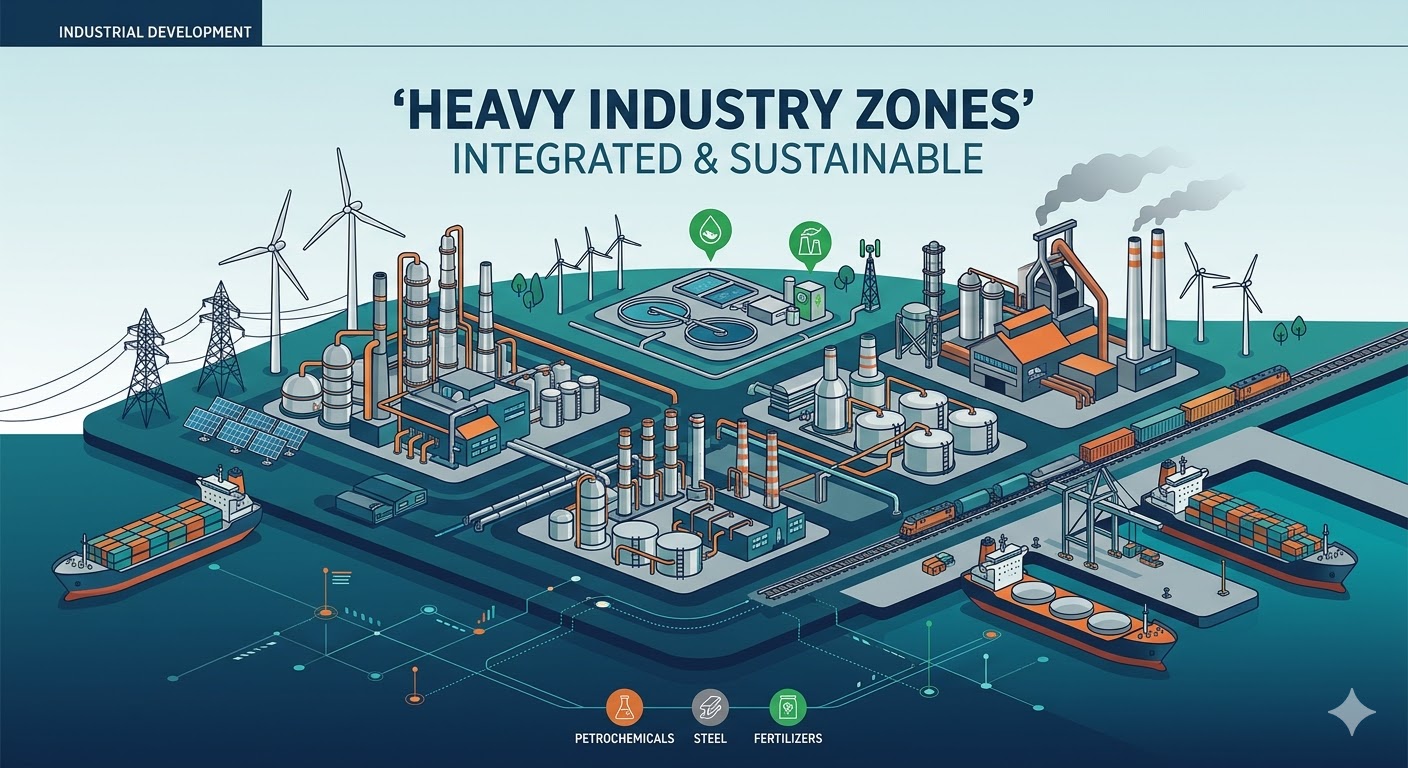
Chemical production and heavy industries form the backbone of modern industrial economies. From petrochemicals and steel manufacturing to industrial materials and fertilizers, these sectors support countless downstream industries including construction, automotive, electronics, and consumer goods.
However, unlike light manufacturing sectors, chemical and heavy industries require highly specialized industrial environments. Large land areas, strict environmental management, robust energy supply, and advanced logistics infrastructure are all critical requirements. For this reason, many countries are developing dedicated chemical and heavy industry zones to support these sectors while ensuring environmental safety and operational efficiency.
1. Why Chemical and Heavy Industries Require Specialized Zones
Heavy industries operate under conditions that are significantly different from typical manufacturing sectors. Chemical plants, refineries, steel mills, and energy-intensive factories often require complex infrastructure systems that standard industrial parks cannot support.
These industries typically demand:
- Large contiguous land areas for large-scale production facilities
- High-capacity power supply and industrial utilities
- Specialized waste treatment and environmental management systems
- Safe transportation routes for hazardous materials
Without proper zoning and infrastructure planning, heavy industrial activities can pose serious environmental and safety risks. Dedicated industrial zones allow governments and developers to manage these risks more effectively while providing companies with the infrastructure they need.
2. Global Trends in Heavy Industry Zoning
Around the world, governments are increasingly concentrating heavy industries in integrated industrial clusters designed specifically for energy-intensive and chemical production.
For example, major petrochemical hubs often develop near deep-sea ports to facilitate large-scale imports of raw materials and exports of finished products. Similarly, steel manufacturing zones are typically located close to transport networks capable of handling bulk commodities.
These specialized zones offer several advantages:
- Efficient logistics for raw materials and exports
- Shared infrastructure such as pipelines, storage facilities, and treatment plants
- Better environmental monitoring and risk management
- Stronger industrial ecosystems connecting suppliers and downstream industries
By concentrating heavy industries within designated zones, countries can improve both industrial productivity and environmental governance.
3. Vietnam’s Development of Chemical and Heavy Industry Zones
Vietnam has increasingly recognized the importance of strategic zoning for heavy industries as it seeks to move further up the industrial value chain.
Several coastal provinces have emerged as potential locations for heavy industry development due to their access to deep-water ports, large land availability, and expanding energy infrastructure.
Industrial zones designed for chemical and heavy manufacturing typically focus on sectors such as:
- Petrochemicals and refining
- Steel production and metal processing
- Energy-intensive material manufacturing
- Fertilizers and industrial chemicals
These zones are often integrated with large-scale logistics systems including seaports, highways, and energy facilities, ensuring that heavy industries can operate efficiently.
4. Environmental and Safety Considerations
One of the most critical challenges associated with chemical and heavy industry zones is environmental management. Industrial processes in these sectors can generate hazardous waste, emissions, and large energy consumption.
To address these challenges, modern heavy industry zones increasingly incorporate advanced environmental infrastructure, including:
- Centralized wastewater treatment systems
- Industrial emissions monitoring systems
- Hazardous material storage facilities
- Environmental impact monitoring platforms
Strict zoning regulations also ensure that heavy industrial activities are located at safe distances from residential areas and sensitive ecosystems.
These measures are essential for balancing industrial development with environmental protection.
5. Infrastructure Requirements for Heavy Industry Clusters
Infrastructure plays a decisive role in determining the success of heavy industry zones. Compared with typical manufacturing parks, heavy industry clusters require significantly greater infrastructure capacity.
Key infrastructure components include:
- High-voltage electricity supply for energy-intensive production
- Deep-water port access for bulk cargo transportation
- Industrial pipelines and storage systems
- Rail and highway connectivity for raw materials and distribution
Because of these requirements, many heavy industry zones are developed in phases with substantial government involvement and long-term infrastructure planning.
6. The Role of Data and Industrial Intelligence
As heavy industry investments become larger and more complex, data transparency and industrial intelligence platforms are becoming increasingly important for site selection.
Investors must evaluate multiple factors simultaneously, including land availability, infrastructure capacity, logistics networks, and environmental regulations. Digital industrial mapping platforms and data-driven investment tools can significantly improve the efficiency of this process.
Access to reliable industrial data enables investors to identify zones that meet the technical and regulatory requirements of chemical and heavy industry operations.
7. The Future of Heavy Industry Zones in Southeast Asia
As Southeast Asia continues to industrialize, demand for chemical materials, steel products, and industrial inputs is expected to grow significantly. This trend will likely accelerate the development of specialized heavy industry zones across the region. For Vietnam, strategically planned chemical and heavy industry clusters could strengthen the country’s role in regional manufacturing supply chains.
However, the long-term success of these zones will depend on a careful balance between industrial competitiveness, infrastructure readiness, and environmental sustainability.
By combining strategic zoning, modern infrastructure, and transparent industrial data systems, countries can create heavy industry ecosystems that support both economic growth and responsible industrial development.
(1).png)